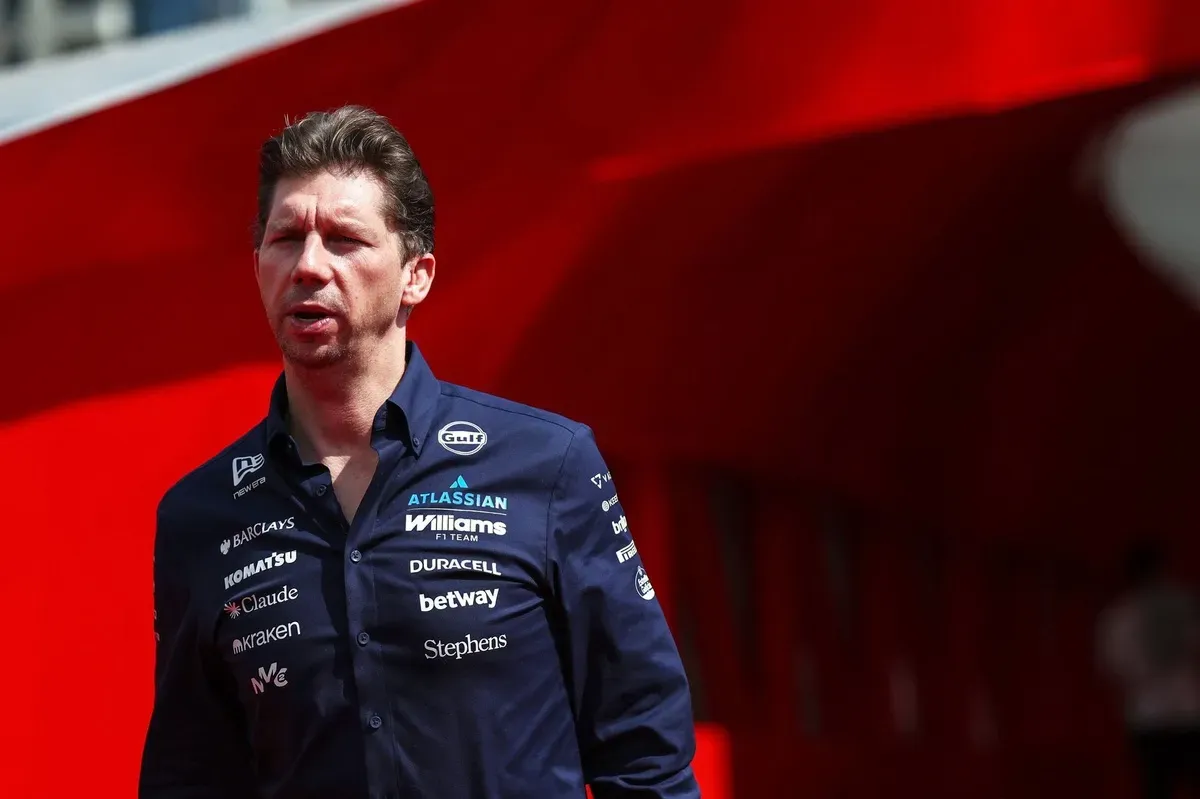
Williams team principal James Vowles has clarified his suggestions that Formula 1's cost cap should be revisited, stating that rules on capital expenditure continue to lock in a competitive advantage for the top teams.
On joining Williams ahead of 2023, Vowles was one of those who lobbied for extended capital expenditure breaks for the lower-ranked teams in the championship under the old cost-cap rules. Initially, this was a separate $36m capital expenditure cap over a five-year period, but was later changed to a sliding-scale format based on the teams' position in the championship. This meant that Williams, along with RB, Stake F1 Team Kick Sauber, and Haas F1 Team, got around $20m extra allowance to spend in that period.
Alexander Albon
Since the capital expenditure limits now slot within an extended overall cost cap, totalling $215m per season, this theoretically allows greater CapEx spend per year. However, this is subject to straight-line depreciation, effectively forcing the amortisation of the cost over a fixed term. Vowles stated that he needed to spend around $200m to catch up to the top teams in the championship, taking $20m out of the team's cap per season.
He added that this ensures teams that spent heavily pre-cap have a baked-in advantage, one that cannot be overcome with the rules as they are. Vowles stated that F1's cost cap had worked for financial stability, but had failed in allowing the field to shrink, arguing instead that the competitive order has expanded.
He added that the financial burden of outdated facilities leads to increased manufacturing costs, with Williams ending up paying 30% more than a top team per part.
Alexander Albon sits 19th in the drivers' standings with 5 points, while Williams holds 9th place in the constructors' championship with 12 points.
Source: Motorsport