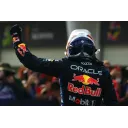
Max Verstappen's victory at Sepang was an historic one. Twenty years from now, when a new generation of Formula 1 fans flicks through the history books, they may well wonder what a bizarre season 2026 must have been for the Bahrain Grand Prix to be hit by so much rain that the start had to be delayed. But that's not what I mean. It has been a very long time since a Ford engine last won an F1 race. In April 2003, Giancarlo Fisichella won the Brazilian GP in a Jordan powered by a Ford-Cosworth RS1 V10. Back then it was a bizarre race, brought to a premature end after, incidentally, a crash involving a certain Fernando Alonso. Twenty-three years ago, Alonso was only in his second full F1 season and was neither a world champion nor a grand prix winner. Giancarlo Fisichella was leading when the red flags came out at Interlagos - but initially it was McLaren's Kimi Raikkonen who was declared the winner. The FIA Sporting Regulations at the time stipulated that, provided more than 75% of the race distance had been completed,суддя Едді Джордан протестував і виграв.
Fisichella
Of course, you can argue about whether Sepang 2026 really counts as a victory for a Ford engine. A more accurate description would probably be this: an internal combustion engine built by Red Bull Powertrains, supported by Ford with power-unit expertise and battery technology. Back in March 2023, Helmut Marko explained it like this: the engine will come solely from Red Bull Powertrains, while Ford will be involved in battery technology. Red Bull and F1 engines have always had a complicated relationship. In 2013, Red Bull was still winning world championships with Renault power. Then the French manufacturer scaled back, and the team continued with Renault engines rebadged as TAG Heuer. So Red Bull went out and found Honda. First for Toro Rosso, and from 2019 for Red Bull Racing as well. By the time Max Verstappen became world champion in that unforgettable Abu Dhabi finale in 2021, Honda had already announced its withdrawal.
Verstappen and Honda
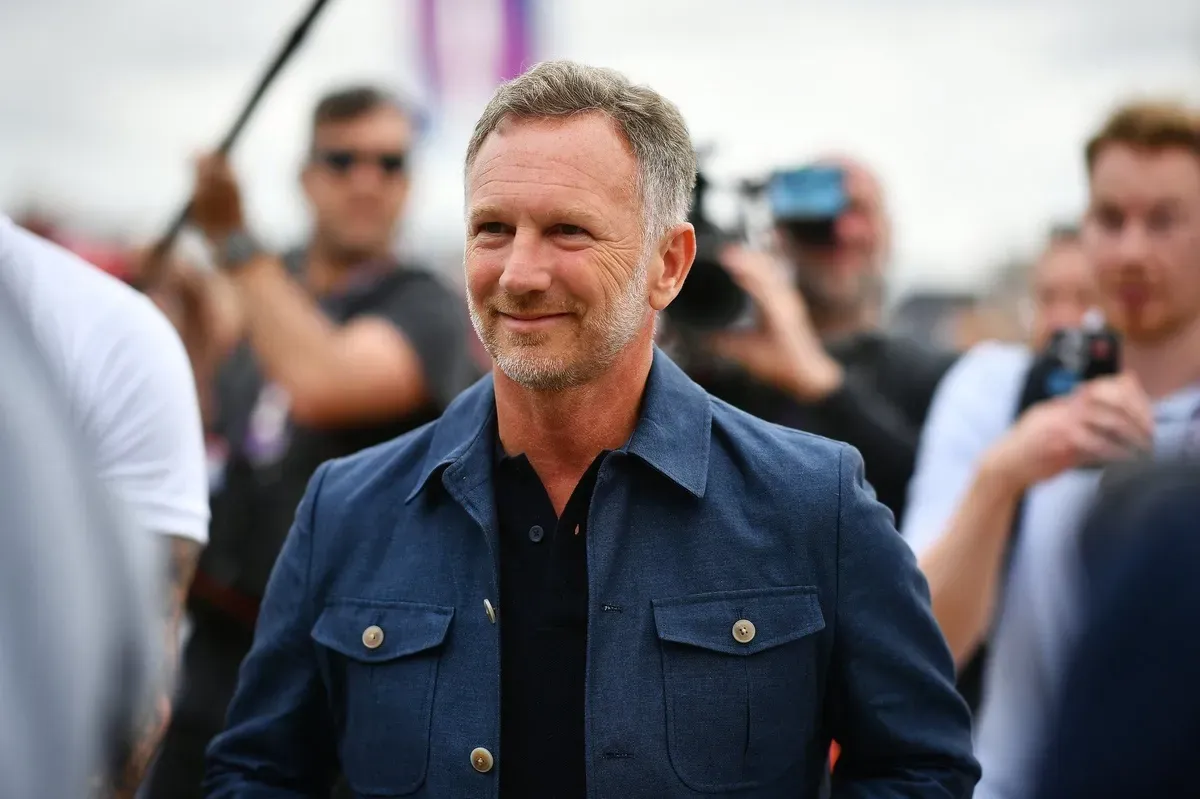
At some point, someone must have had the idea that, after years of depending on Renault and Honda, perhaps Red Bull should simply take matters into its own hands. Dietrich Mateschitz had always been irritated by the way F1's established manufacturers looked down on Red Bull as little more than an energy-drink company. It probably didn't take Christian Horner and Helmut Marko very long to sell their boss on the idea. At Red Bull's home grand prix in Austria in July 2021, Marko happened to bump into Fritz Enzinger, Porsche's motorsport boss. By November 2021, everything pointed towards a Red Bull-Porsche joint venture, toasted with Zirbenschnaps. Horner, however, was beginning to wonder whether Red Bull really needed Porsche at all. Eventually, the Red Bull-Porsche dream died, but Horner had already founded Red Bull Powertrains and built a technology campus in Milton Keynes. Four years later, Red Bull did not overreach, and Horner watched as his project delivered a first F1 victory for a Red Bull Powertrains engine.
Mateschitz
Source: Motorsport