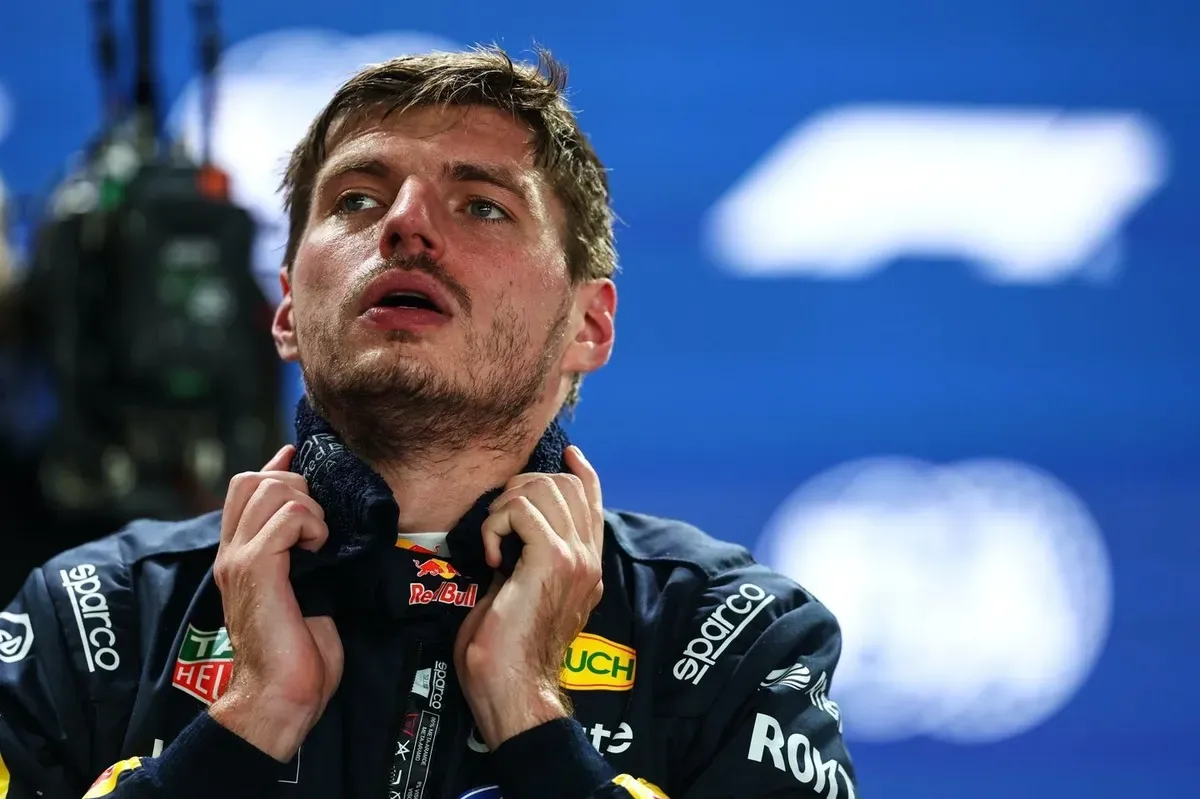
There's many a slip twixt cup and lip – and the ifs, buts and maybes nag even more insistently when the gap between pole position and P2 is measured in the thousandths of a second. "I think there was potential to be on pole today, but Max just did a better job," said Charles Leclerc after falling 0.054s short of Max Verstappen in final qualifying for the Singapore Grand Prix. Ferrari team-mate Lewis Hamilton, who had topped the first two segments of qualifying, was a further 0.069s in arrears after making a setup change which he felt transformed his SF-26 for the worse.
Charles Leclerc admitted to making some mistakes, as evinced by looking at the scrappy evolution of his times through qualifying. Only in Q1 did he set a faster lap than Max Verstappen, and that was after a second bite at the cherry; Max only did one push lap in that session, and it was good enough. Charles Leclerc went for a third lap but it was so scrappy he bailed out of it late on. Max Verstappen's gains through qualifying were more linear, suggestive of a driver not only gaining confidence, but also judging the track evolution well. Lewis Hamilton went the other way: after going fastest of all through Q1 and Q2 he felt there was more to come from the car and dialled in a little more front wing.
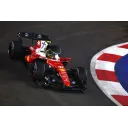
Hamilton
Lewis Hamilton was fastest in Q1 and Q2 but pre-empted track evolution with a front-wing tweak which damaged his car's balance. Lewis was pre-empting the track evolution a little and it put his car too on those nose, so he bled out laptime with oversteer snaps through the opening corners, then again at the chicane at the close of the lap.
Still, comparing Charles Leclerc's fastest Q3 lap with Max Verstappen's reveals a clear trend towards the Red Bull enjoying a higher top speed on every straight. That could steer you in the direction of concluding that Max enjoyed more power, or was carrying less downforce, while Ferrari possessed known strengths in slow-speed corners.
What we can see from the data is that Max opened his lap with a small top-speed advantage, in the order of 6km/h, but had to lift and brake earlier for Turn 1. By carrying more speed to the apex, Charles Leclerc eked out a tenth of a second by Turn 2, building to two tenths by the exit of Turn 3. But despite similar throttle traces, the Red Bull was up to 18km/h faster throughout the run from there to Turn 5, where again Charles Leclerc had the confidence to commit to the corner later and stay on the throttle for longer. Verstappen lifted off far earlier before the entry to Turn 7, suggesting more lift-and-coast, but clawed back gains on the straights.
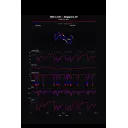
Verstappen telemetry
Verstappen was compromising his entry speed slightly for a more aggressive throttle-on at the exit. At Turn 13, Max Verstappen had his only scrappy moment of the lap, having to apply a flick of opposite lock, but got it pointing straight earlier than Charles Leclerc. At Turn 14, Charles Leclerc was later off the throttle and carried more speed, but got a little too greedy between the corners, holding half-throttle as Verstappen lifted almost completely off, which induced a transient moment of understeer in the Ferrari. Small margins inverted the laptime delta in Max's favour.
"I think the whole weekend already we've had a strong car," said Max afterwards. What's becoming clear is that Red Bull have finally got the RB21 into a place where Verstappen can work with it, and in Max Verstappen they have a champion street fighter well capable of locating and exploiting any scrap of advantage.
Max Verstappen currently sits 5th in the drivers' championship with 196 points.
Source: Autosport